
.jpg)
Public Works and Utility departments manage some of the most complex inventories in local government. Their inventory often includes fleet vehicles, heavy equipment, meters, valves, pipe, transformers, tools, and tons of scrap materials. These assets are all critical to daily operations, public safety, and regulatory compliance.
When assets reach the end of their service life, agencies often find it challenging to keep clear records, maintain accountability, and ensure transparency during the surplus disposal process. Our partnerships with Public Works and Utility agencies across the country reveal a frequent source of confusion between inventory tracking and inventory traceability. Traceability is especially important in surplus, when assets are subject to audits, sales, or public scrutiny.
Tracking vs. Traceability: What’s the Difference?
Although related, tracking and traceability serve different operational and compliance needs.
Inventory tracking is the process of monitoring an asset’s current location, quantity, and status. It focuses on day-to-day operational visibility.
Tracking answers questions such as:
- Where is this backhoe or service truck today?
- How many spare water meters are in the yard?
- Is this transformer in storage, in use, or surplus?
Inventory traceability is the ability to document and retrieve an asset’s entire lifecycle, from acquisition through final disposal.
Traceability answers questions like:
- When and why was this asset taken out of service?
- Who approved it as surplus?
- What condition was it in when taken out of service?
- How was it sold or disposed?
- Can we prove compliance during an audit or public records request
Tracking tells you what you have today. Traceability tells you what happened yesterday and why.
Why Inventory Traceability Matters in Surplus Sales
Inventory traceability is about more than recordkeeping; itis about protecting public assets, ensuring compliance, and maximizing value throughout the asset lifecycle. By maintaining documented proof of asset history, agencies meet federal and state regulatory requirements while reducing risk through rapid responses to audits or recalls. Traceability also enables effective root cause analysis when failures occur, helping identify sources and prevent future issues. Most importantly, it promotes transparency and accountability, building public trust and guaranteeing the ethical disposal of taxpayer-funded assets.
How Inventory Traceability Works
True traceability follows an asset from the field to final disposition.
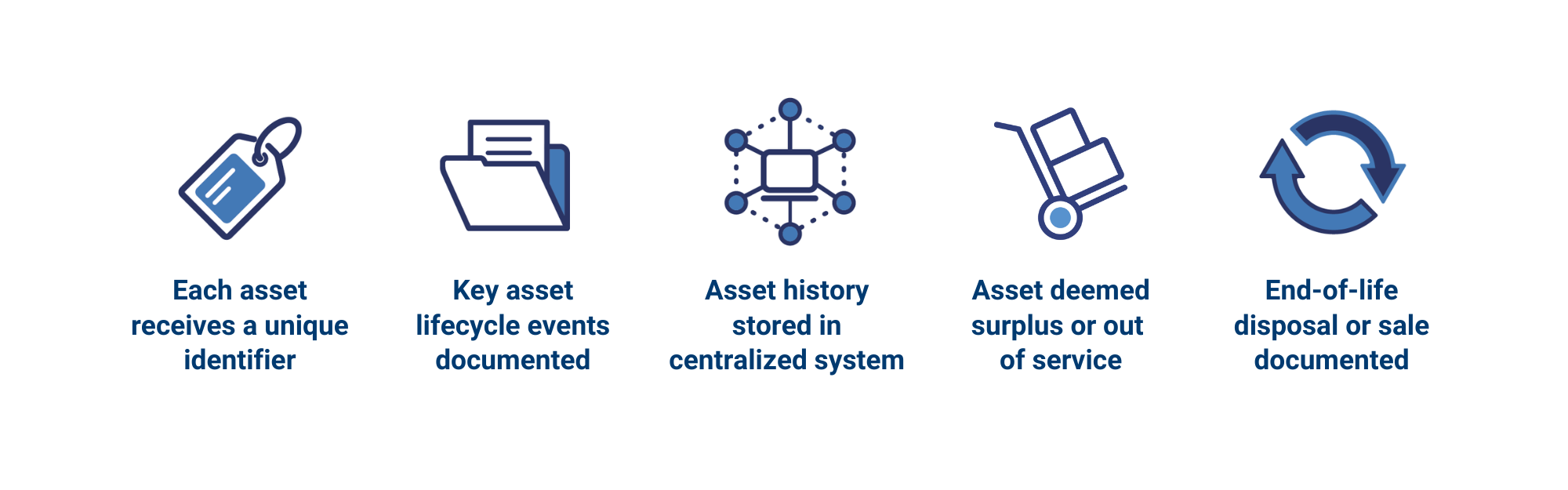
Traceability as a Risk Management Tool
When discrepancies occur, inventory traceability becomes the foundation for effective root cause analysis. Rather than relying on assumptions or manual reconstruction, agencies with traceable systems can rebuild the full history of an asset in minutes.
With proper traceability, agencies can:
- Identify exactly when an asset changed status
Determine the precise moment an item moved from “in service” to “out of service,” from “stored” to “surplus,” or from “surplus” to “sold.” This time-based visibility is critical for isolating where breakdowns occur. - Establish accountability at every decision point
Traceability links assets to approvals, work orders, inspections, and surplus authorizations, clearly showing who handled the asset, who approved its removal, and who authorized its disposition. - Pinpoint process failures and control gaps
Lifecycle records reveal whether issues stemmed from missed inspections, delayed surplus declarations, unauthorized transfers, inadequate documentation, or weak handoffs between departments. - Turn incidents into process improvements
Instead of simply correcting one error, traceability allows agencies to redesign workflows, strengthen controls, and prevent repeat issues.
Traceability is what transforms audits and discrepancies from reactive investigations into data-driven improvement opportunities. It does not just explain what went wrong. It shows where, when, how, and why and provides the evidence needed to correct it.
What Agencies Should Look for in Traceability Inventory Management
Inventory traceability isn’t just an operational feature, it’s a critical risk management tool. The right inventory and surplus solution should protect agencies financially, operationally, and publicly while simplifying compliance.
When evaluating inventory systems or surplus auction platforms, agencies should prioritize solutions that close the loop on asset accountability and extend traceability through the final stage of the lifecycle disposal. GovDeals delivers exactly that by combining compliance-driven features with transparent surplus sales.
Key capabilities to look for in a surplus solution:
- End-to-End Lifecycle Visibility: Track assets from acquisition to auction.
- Clear Audit Trails and Approval Records: Ensure defensible documentation for audits.
- Bulk Surplus and Scrap Sales Support: Streamline large-scale disposals.
- Integration with Existing Asset Systems: Eliminate data silos and manual work.
- Transparent Reporting and Reconciliation: Provide real-time insights for stakeholders.
- Secure, Defensible Documentation: Protect against compliance risks.
An online auction platform should do more than dispose of assets it should serve as the final link in your inventory management chain, preserving traceability and accountability through the surplus sale process. GovDeals ensures that every transaction is auditable, secure, and aligned with public sector standards.
Why Traceability Matters in Surplus Sales
Traceability goes beyond recordkeeping; it helps protect public assets, ensure compliance, and maximize value. Agencies using traceability in surplus sales benefit from fewer audit issues, recover greater value from scrap and surplus, strengthen public trust, and reduce administrative burden.
When surplus sales are managed through a transparent, auditable online auction platform like GovDeals, agencies gain operational efficiency while supporting sustainability goals. This approach reduces waste, ensures responsible asset disposal, and converts surplus into funds that directly support public services.
Ready to turn surplus into strategy? Partner with GovDeals today to streamline your surplus asset sales while maintaining full compliance and transparency. Get started today!